 jed.si
The economics of making something twice.
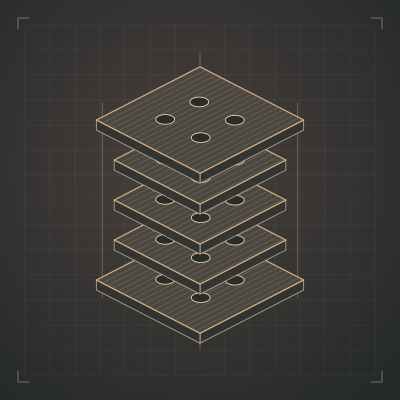
The expensive part of a second product is often recognising how much of it the first team already built. A shared component can carry forward years of testing. It can also turn a small change into a negotiation across every product that depends on it. Industrial research comparing shared platforms with copying and adapting software found both effects: reuse became cheaper, while the cost of propagating changes could be surprisingly high.
Biology offers a useful design intuition. A relatively small repertoire of parts can take on different roles in different contexts. Our software factory explores where that principle holds in engineering. The measure is the total effort to deliver and maintain the next working product, including integration and verification. Counting the lines of code we didn’t write would miss most of the question.